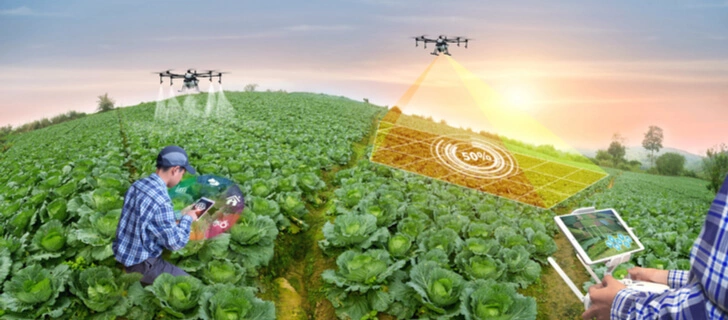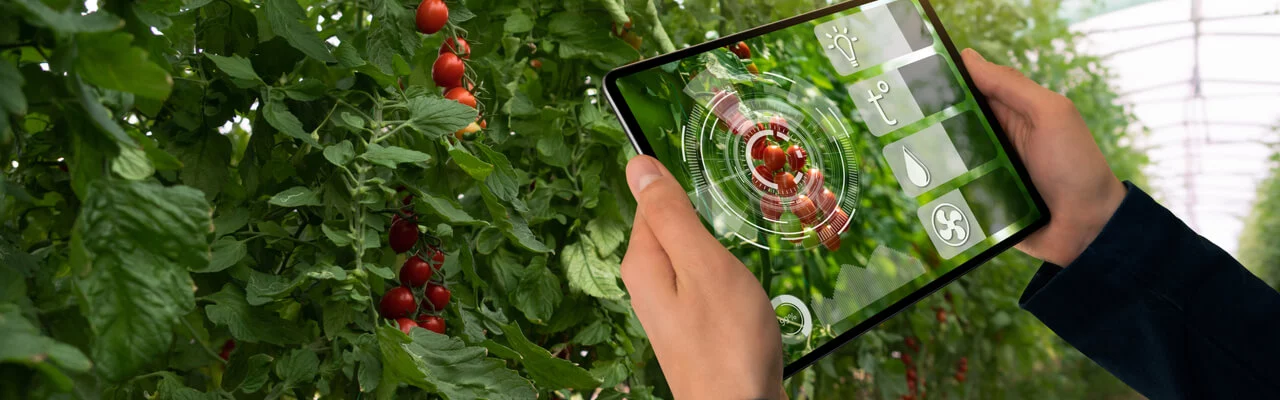
The modern agricultural business is evolving in a variety of directions at the same time. However, its primary focus is utilizing agricultural technologies to boost crop yields through better planning and smarter management. By promoting more efficient and sustainable farming methods, advanced technology in agriculture helps farmers prosper in today’s agribusiness. Time-tested practices like crop rotation and new agricultural technologies, such as monitoring field productivity with machinery and satellite images or special farming software, all contribute to the viability of agriculture.
What Is Agriculture Technology?
Agricultural technology, also known as “agritech,” encompasses a broad range of disciplines and devices that improve agricultural output. That includes vehicles, robotics, computers, satellites, drones, mobile devices, and software. The use of big data analytics and artificial intelligence (AI) technology in agriculture is also an example of how the farming sector is embracing technological advancement. Changes in farming and field management during the past few decades have been revolutionary. The employment of modern, state-of-the-art technology in agriculture can be credited with much of the recent success in crop management and increased harvests.
Importance Of Technology In Agriculture
Agricultural technology aims to make work in the field more efficient and convenient. Each year, there are various new agricultural innovations and, occasionally, ground-breaking technologies. As agribusiness continues to modernize and grow, it is becoming increasingly crucial for agricultural consultants, food producers, and technology managers to be knowledgeable and up-to-date with the latest technological standards. Water, fertilizer, pesticides, and other inputs are no longer applied “by eye” or uniformly across the field by large agricultural producers. The use of advanced agriculture technologies allows for the precise application of only what is required in each location, as well as the careful tailoring of treatment for each plant